
How El Niño Could Affect Global Shipping and Moisture Risk
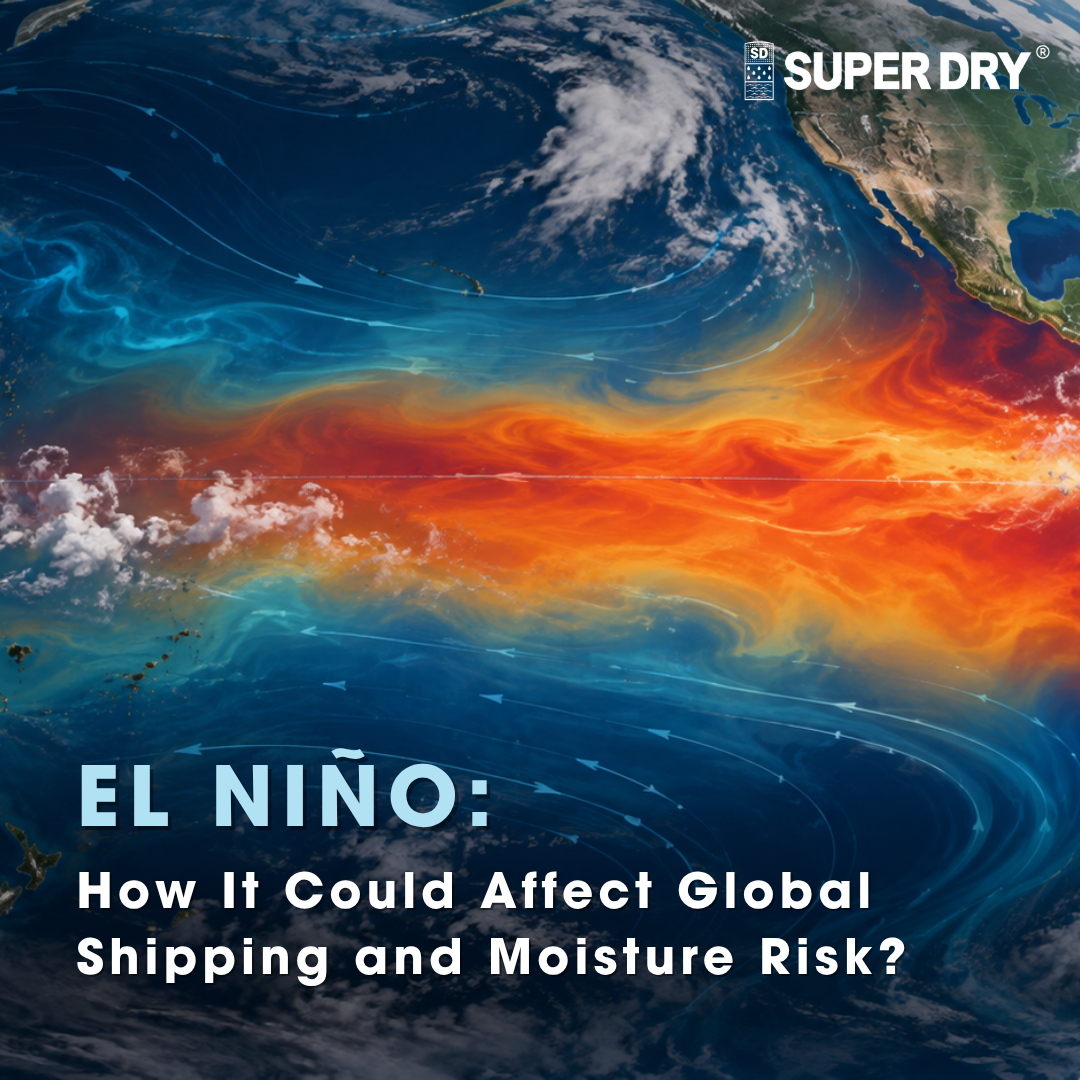
El Niño can affect more than rainfall and temperature. It can also change the conditions cargo experiences while moving across global shipping routes.
For exporters, that matters because moisture risk does not begin and end at the loading port. A shipment may pass through several different climates before reaching its destination, and El Niño can make those conditions less predictable.
What is happening
The World Meteorological Organization expects El Niño conditions to continue over the coming months, with changes in rainfall and temperature patterns across different regions.
Some areas may experience heavier rainfall, while others may become hotter or drier than usual.
For global shipping, this means familiar routes may face different climate conditions from what exporters normally expect during the season.
How El Niño can affect shipping routes
A container may leave a warm and humid port, travel through cooler waters, spend time at another port under different weather conditions and finally arrive in a much drier or colder destination.
These changes in temperature and humidity can affect what happens inside the container.
Moisture may already be present in the cargo, wooden pallets, cardboard packaging and the air inside. When the container passes through changing temperatures, that moisture can condense on colder surfaces and contribute to container rain.
El Niño can add another layer of uncertainty because rainfall, heat and humidity along certain routes may differ from normal seasonal patterns.
This means a route that has historically presented a lower moisture risk may not behave the same way every year.
What this means for cargo
For moisture-sensitive products, changing conditions during transit can contribute to mold, corrosion, damp cartons, staining, damaged packaging and product deterioration.
The risk depends on more than whether it rains during shipping. Transit time, cargo type, packaging materials, temperature changes and the climates along the route all play a role.
How Super Dry can help
At Super Dry International, moisture protection is planned around the full journey.
By considering the cargo, packaging, transit time, shipping route and expected climate conditions, the right level of moisture protection can be selected for each shipment.
As El Niño continues to affect weather patterns across different regions, exporters may need to look more closely at the routes their cargo travels through and whether their current moisture protection is still enough.
Shipping through changing climates? Super Dry can help assess your moisture risk and recommend the right protection for your cargo and route. Contact us to learn more!