
Southwest Monsoon Returns: What Your Business Should Prepare For
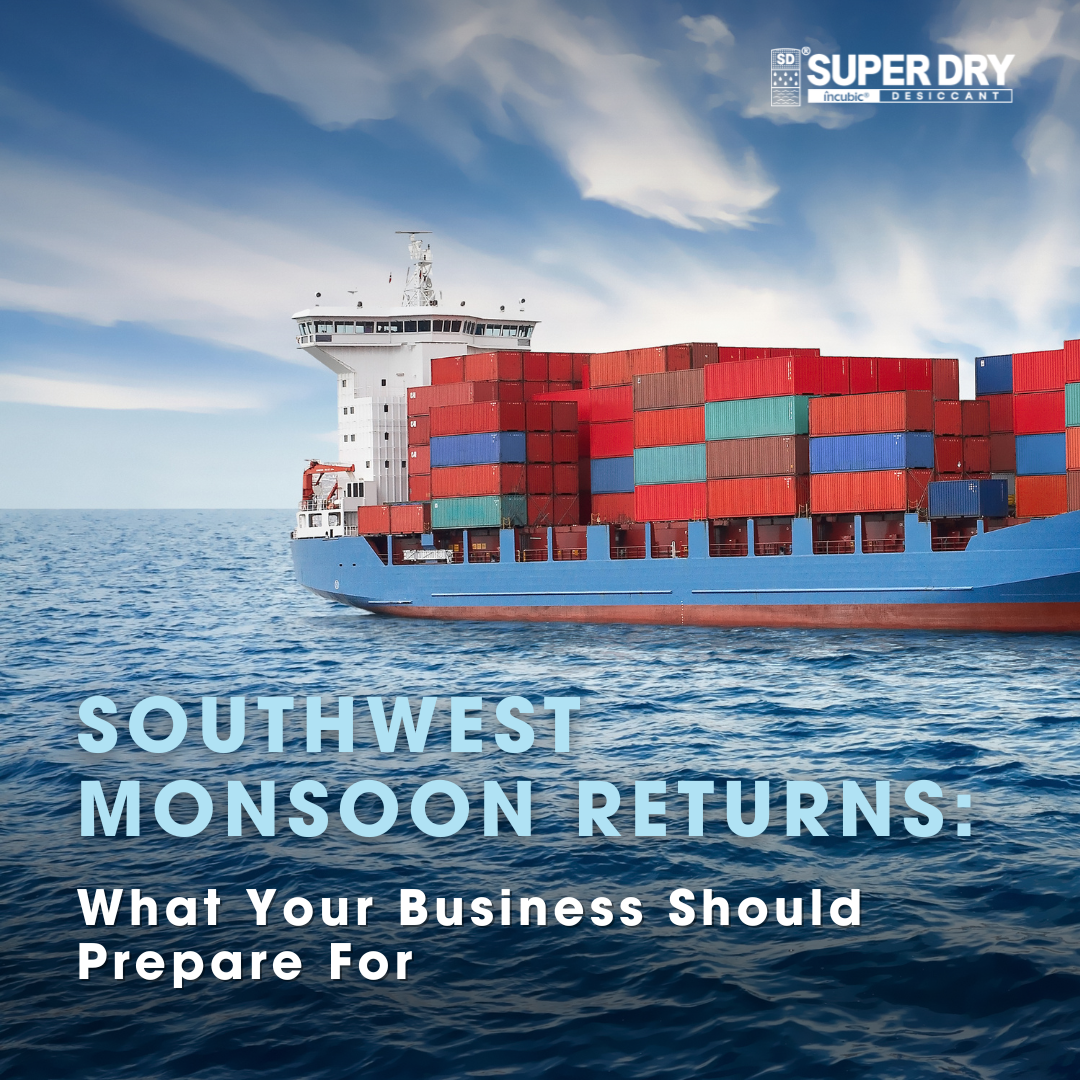
A seasonal shift that the shipping calendar tends to overlook
From late May onwards, the Southwest Monsoon begins to establish itself across the ASEAN region, as the predominant winds turn to blow from the southeast or southwest. The ASEAN Specialised Meteorological Centre expects near to above normal rainfall over parts of the western and central equatorial region during this period. For most of the supply chain, this registers as little more than a weather note, something that affects port operations on the worst days but otherwise sits in the background. The cargo keeps moving, the bookings keep flowing, and the rainfall rarely makes its way into anyone’s shipment planning.
The moisture risk begins long before the vessel sails
What the monsoon actually changes is the amount of moisture present in the air at the exact moment goods are being packed and loaded. When humidity climbs at origin, that humid air is sealed inside cartons, poly bags, and containers along with the cargo itself. Natural materials make the situation more difficult, because fabrics, leather, wood, and many agricultural products are hygroscopic and hold water that is not visible to anyone inspecting the shipment. A container can be loaded clean and dry to the eye while already carrying the conditions for damage on board.
Why a long ocean crossing turns trapped humidity into a problem
The trouble surfaces once the container begins moving through changing climate zones. Sudden temperature changes are common during sea transport, and they raise the risk of what the industry calls container rain or cargo sweat, where warm humid air meets the cooler steel of the container and condenses. The water that forms collects on the ceiling and walls before dropping back onto the cargo below. Over a crossing that can run for weeks, this cycle repeats with every shift in temperature, and the outcome is the familiar set of moisture problems: mould and mildew, staining, odour, corrosion on metal fittings, and packaging that weakens and collapses. None of this depends on a leak or on rain reaching the cargo directly. The moisture was loaded along with the goods, and the voyage simply gave it the conditions to do damage.
The prevention
This is the problem Super Dry was built to solve. As the company that first introduced calcium chloride and starch based in box desiccants, Super Dry developed moisture control that can be placed in direct contact with goods and that keeps absorbing through the full length of an ocean crossing, holding the container environment dry across exactly the kind of temperature swings the monsoon season brings. When the moisture risk starts at loading, the protection has to start there too.
Contact us at www.superdryers.com for a free consultation with our moisture specialist!