Save the Best for Pets: How Moisture Damage in Pet Food is Handled by SUPER DRY
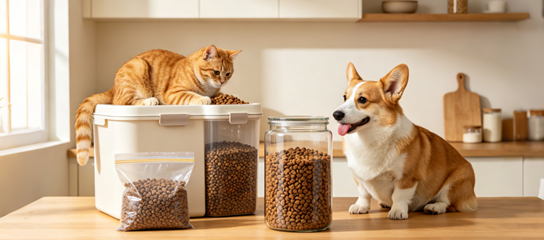
“Pet food storage requires moisture control to ensure safety and quality.”
The global pet food industry is on a steep growth, projected to reach $247 billion by 2035. Rising pet ownership and growing awareness of pet health have pushed requirements for premium pet food to new heights.
Today’s pet owners evaluate labels, demand high-quality ingredients, and expect food to stay safe and fresh at every step. Yet one of the most significant threats to that expectation is also one of the most underestimated: moisture.
The Silent Spoiler: Moisture
Moisture may seem harmless, but for pet food, it can quickly become a serious problem. Once it enters packaging, the chain of damage progresses rapidly: mould growth, bacterial contamination, and nutrient loss. Even products that appear completely normal can already be deteriorating internally.
Dry kibble, for instance, contains 10~12% residual moisture at manufacture and is sensitive to ambient humidity. A Moisture increase during transport or storage is enough to trigger mould damage within days. For pets, it can result in digestive problems and fatal organ illness.
For brands, the consequences are more severe. Biological contamination triggered by moisture accounted for up to 35% of all pet food recalls between 2003 and 2022. In a market where consumer trust is hard-won and easily lost, a single moisture-related failure can erode years of brand building.
Where Conventional Solutions Fall Short?
For years, the industry has relied on airtight packaging and silica gel to manage moisture risks. While these methods offer some protection, they are often insufficient to address challenges in pet food transport and storage. Silica gel generally absorbs only about 30% of its weight, limiting its capacity in high-humidity environments or during extended shipments.
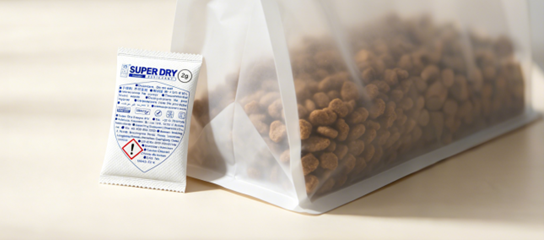
“Calcium chloride desiccant protects pet food freshness and nutrition.”
Tackling moisture challenges is increasingly important as pet food segments expand, raising consumer expectations for quality and safety to levels that previous approaches struggle to meet. The gap between what old solutions promise and what demanding conditions require has grown harder to ignore.
The High-Standard Dryness
Calcium chloride desiccants address moisture challenges with unmatched performance. They outperform silica gel, with an absorption capacity of up to 300% within 90 days, providing stronger and longer-lasting protection.
SUPER DRY brings over 25 years of material expertise to this challenge. It develops customised moisture control systems tailored to each client’s product sensitivity, packaging format and storage environment. Everything from absorption speed to structural design is engineered to suit real-world conditions, across supply chains and household environments.
Safety is equally important. SUPER DRY calcium chloride desiccants are specifically designed to securely retain absorbed moisture without leakage. The double-layered packaging and high-quality breathable film further ensure stable and reliable moisture absorption. These materials and technological innovations protect pet food from contamination.
In an industry where quality is the basis and trust is the key, effective moisture control has become a critical part of delivering premium quality. From factory production lines to the feeding bowl at home, SUPER DRY helps ensure pet food stays safe and fresh every step of the way.
If you’re interested in the new moisture protection solutions for pet food, contact the team: