
⚡ QUICK ANSWER
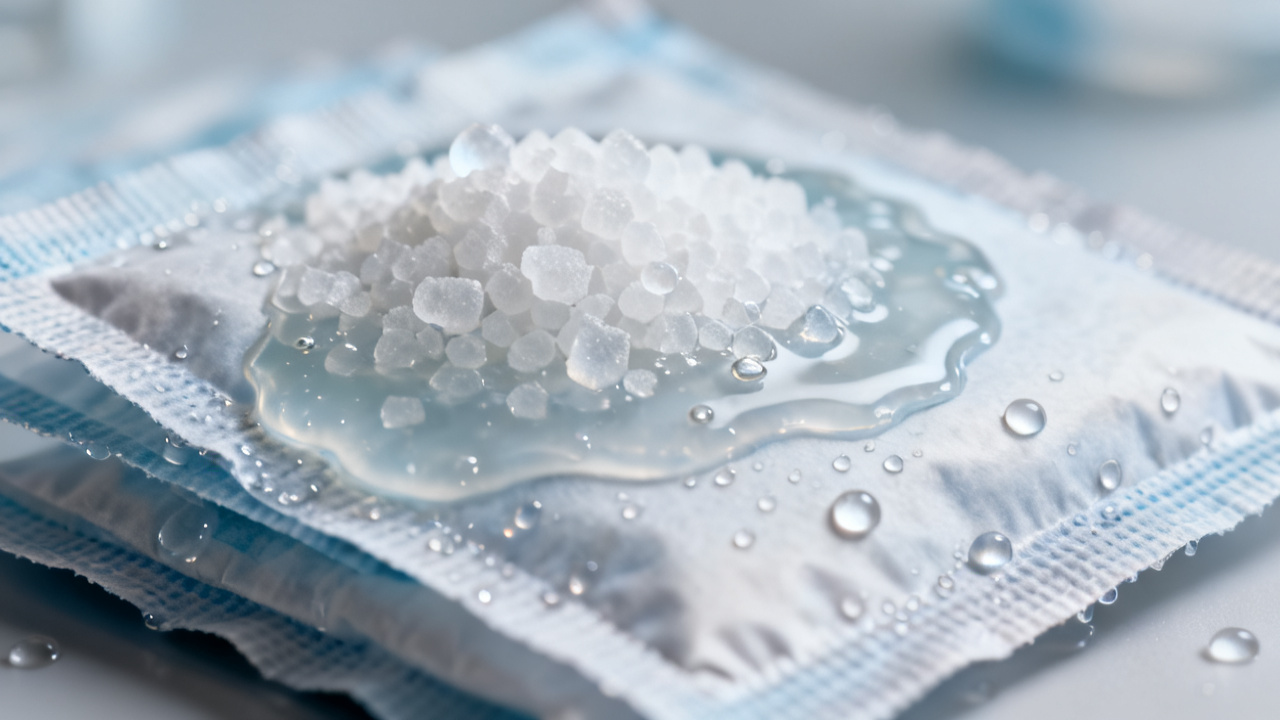
A calcium chloride desiccant absorbs moisture by chemically binding water vapour and converting it into a stable gel or that cannot be released back into the air. Because calcium chloride is deliquescent, it can absorb up to about 200–300% of its own weight — many times more than silica gel — which makes it the leading desiccant for shipping containers, large cartons and other high-humidity, long-duration environments.
📊 KEY FIGURES
• Absorption capacity: up to ~200–300% of its own weight.
• Roughly 10x the capacity of silica gel (~20–30%).
• Deliquescent: keeps absorbing until it fully dissolves the water into gel.
• Locks water away — very low re-release risk even when temperatures rise.
What is a calcium chloride desiccant?
A calcium chloride desiccant is a moisture absorber built around calcium chloride (CaCl₂), a highly hygroscopic salt. Packaged in a leak-resistant pouch, pole or blanket, it pulls water vapour out of the surrounding air and holds it — making it the go-to product for keeping shipping containers and large packages dry.
Calcium chloride is described as deliquescent, meaning it absorbs so much moisture that it eventually dissolves into a liquid brine. In a desiccant, that brine is trapped inside a gelling layer so it stays contained.
How does a calcium chloride desiccant work?
Unlike silica gel, which holds water on the surface of its pores (adsorption), calcium chloride chemically absorbs water into its structure. The process runs in stages:
- Water vapour in the air is attracted to the calcium chloride.
- The salt binds the water and begins to dissolve, forming a concentrated brine.
- A gelling agent thickens that brine into a stable gel, locking the moisture inside the pouch.
- Because the water is chemically held, it is not easily released back into the container even when temperatures rise.
This locked-in absorption is the key advantage for shipping: moisture removed early in a voyage stays removed, instead of being re-released on the next hot day.
How much moisture does calcium chloride absorb?
Capacity is where calcium chloride separates itself from other desiccants. It can typically absorb up to about 200–300% of its own weight, compared with roughly 20–30% for silica gel and clay:
| Desiccant | Typical capacity | Mechanism |
|---|---|---|
| Calcium chloride | ~200–300% of weight | Chemical absorption (deliquescent) |
| Silica gel | ~20–30% of weight | Surface adsorption |
| Clay / bentonite | ~20–30% of weight | Surface adsorption |
General industry ranges; exact values depend on formulation, temperature and humidity.
Where are calcium chloride desiccants used?
Their high capacity and locked-in retention make calcium chloride desiccants the default wherever a large or long-exposed space must stay dry:
- Shipping containers — the primary use, protecting cargo from container rain.
- Large export cartons and crates — textiles, leather, machinery, electronics.
- Agricultural and food exports — coffee, cocoa, grains and other moisture-sensitive goods.
- Storage and warehousing — where humidity control over long periods is needed.
Frequently Asked Questions
How does calcium chloride absorb moisture?
Calcium chloride is deliquescent: it chemically binds water vapour from the air and dissolves it into a concentrated brine, which a gelling agent then thickens into a stable gel. The moisture is locked inside the pouch and is not easily released back into the air.
How much water can calcium chloride absorb?
Up to about 200–300% of its own weight, depending on formulation, temperature and humidity — roughly ten times the capacity of silica gel, which absorbs only around 20–30% of its weight.
Is calcium chloride better than silica gel?
For large or long-duration environments like shipping containers, yes — its far higher capacity and locked-in absorption outperform silica gel. Silica gel remains a good, low-cost choice for small sealed packages.
Is calcium chloride desiccant safe?
Used as directed, container-grade calcium chloride desiccants are designed to trap the absorbed water as a gel inside a leak-resistant pouch, so there is no free liquid. Follow the manufacturer’s handling and placement instructions, and keep away from direct food contact unless the product is certified food-safe.