

Moisture Damage
Moisture damage in shipping occurs when humidity inside containers or packaging exceeds safe levels, causing mold, corrosion, rust, and packaging collapse. It affects an estimated 10% of all containerised cargo globally each year. SUPER DRY desiccants prevent moisture damage by maintaining relative humidity below the dew point throughout the entire voyage.
Moisture damage is a risk factor in any supply chain. It is caused by excessive moisture in product packaging and transport units.
Uncontrolled moisture is a destructive force during transport and storage and leads to
- MOLD / MILDEW
- CORROSION
- WARPING OF THE PACKAGING
- DETERIORATION AND MALFUNCTION OF THE PRODUCT
- STAINING AND DISCOLORATION
- CAKING
- BAD ODOR
Molds play an important role in the decomposition of organic matter in nature. Mold spores are often found in the air and in dust. Molds need two basic conditions for optimal growth: moisture and nutrients.
Corrosion can cause structural damage to a product, but even mild corrosion affects the commercial value of a product. Water is the most common catalyst for corrosion.
Deformation, product deterioration, and malfunction describe the mechanical or electrical failure of materials, products, or packaging. Excessive moisture causes loss of strength, warping or staining and can cause components to malfunction. Discoloration and odor affect the market value of goods and require costly removal upon acceptance of the shipment.
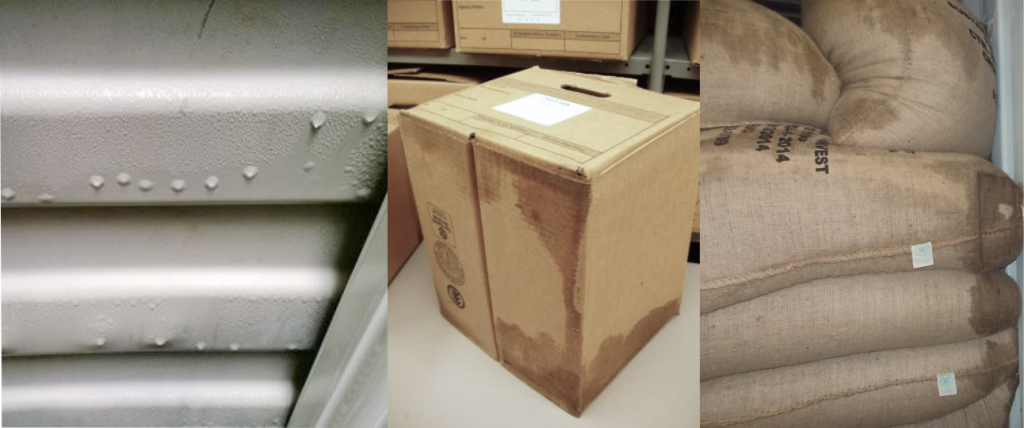
Moisture control is the most effective measure to prevent damage.
Goods shipped in sea containers are particularly at risk because containers offer an ideal microclimate that increases the risk of moisture damage. During any sea transport, the temperature inside the container fluctuates greatly. A drop in temperature leads to condensation of water, as cold air stores less water than warm air.
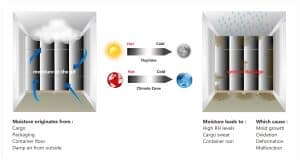
When the container is exposed to temperatures below the dew point, moisture from the ambient air condenses, which is mainly visible on the ceilings and walls of the container. These water droplets can drip onto the cargo, a process known as container rain. Condensation can also occur within the packaging of the goods, which is known as cargo sweat.
These are repetitive processes during transport that increase the risk of moisture damage, such as mold growth, corrosion, deformation, malfunction or odor.
Frequently Asked Questions About Moisture Damage
Q: What causes moisture damage in shipping containers?
A: Moisture damage occurs when humidity inside containers exceeds safe levels, causing condensation on container walls and cargo surfaces. The main causes are temperature fluctuations during ocean voyages, high-humidity ports, and moisture contained within the cargo itself.
Q: What is the difference between container rain and cargo sweat?
A: Container rain occurs when warm, humid air inside a container cools and condenses on container walls and ceilings, dripping onto cargo. Cargo sweat occurs when cold cargo is exposed to warm, humid air and moisture condenses directly on the cargo surface. Both are prevented by container desiccants.
Q: How much does moisture damage cost?
A: Moisture damage affects an estimated 10% of all containerised cargo globally each year. A single moisture-damaged container load can cost between USD $5,000 and $500,000 depending on cargo value.
Q: How do you prevent moisture damage in shipping containers?
A: The most effective prevention is installing calcium chloride container desiccants before sealing the container. SUPER DRY desiccants absorb up to 300% of their weight in moisture and remain active for up to 90 days, maintaining safe humidity levels throughout the entire voyage.
Protect Your Cargo from Moisture Damage
SUPER DRY container desiccants are trusted by 40,000+ customers worldwide to prevent mold, corrosion, and packaging collapse during ocean shipping.