
What Is a Desiccant? How It Works, Uses & Examples

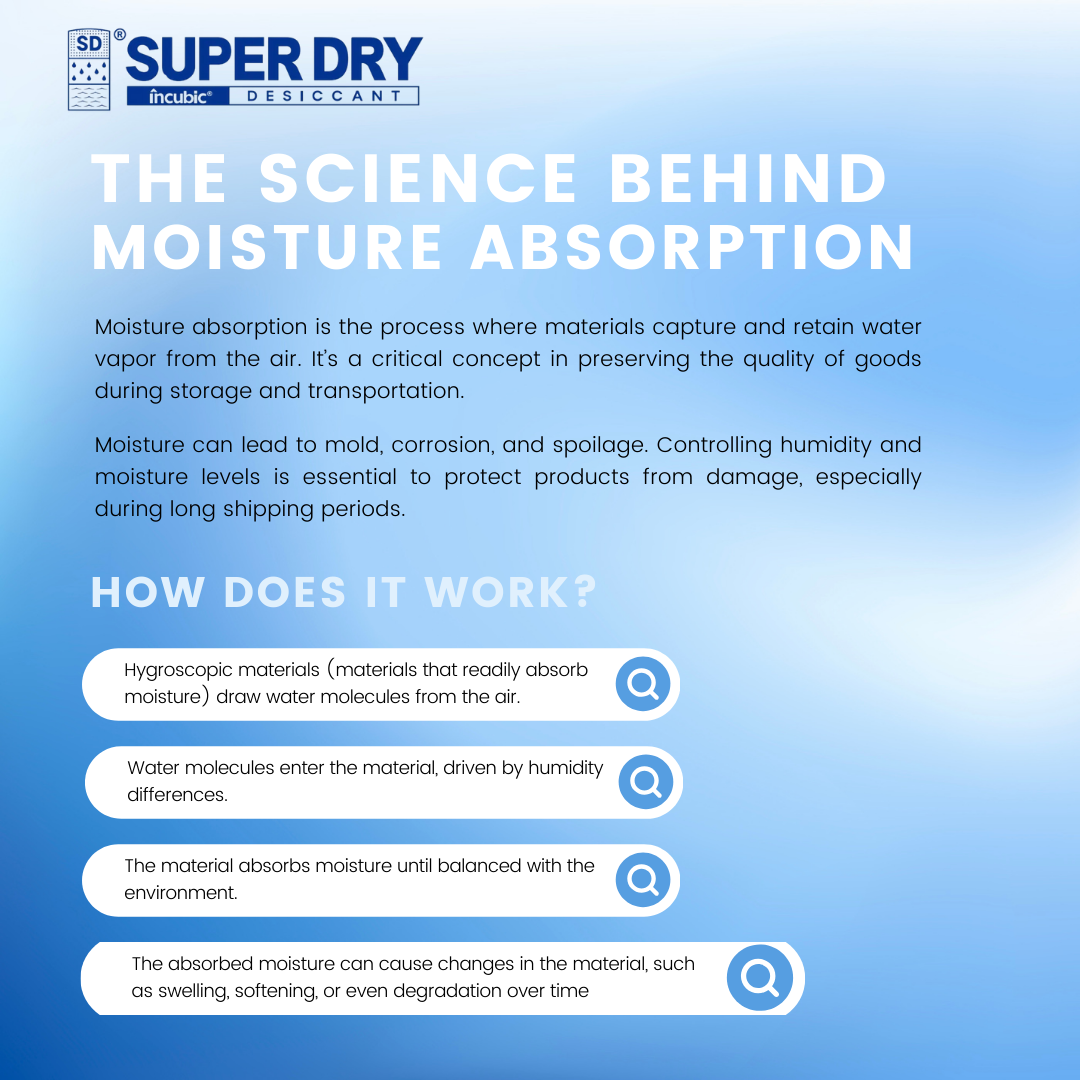
Moisture absorption affects many industries, from packaging and shipping to construction and manufacturing. Understanding what a desiccant is used for helps businesses protect products from damage caused by excess moisture.
So, what is a desiccant and how do they work? Here’s a full breakdown, plus which type fits your packaging, route, or storage needs.
What Is a Desiccant?
A desiccant is a drying agent, usually a hygroscopic material like silica gel, clay, or a chloride salt, that draws water molecules from the surrounding air and holds onto them. Materials like wood, cardboard, and certain fabrics attract moisture on their own too, which is exactly the problem desiccants are built to solve before that moisture ever reaches the product.
Desiccant vs Dehumidifier vs Moisture Absorber
These three terms often get used interchangeably, but each works differently to control moisture.
- Dehumidifier: An electrical appliance that pulls humidity from open room air
- Desiccant: A small, passive, non-powered packet placed inside sealed packaging or containers
- Moisture absorber: A broader term covering desiccants and other passive drying products
Key Terms to Know
Relative humidity (RH): How much moisture the air holds compared to its maximum capacity at a given temperature.
Absorption: Water vapor being chemically drawn into a material’s structure.
Adsorption: Water vapor binding to a material’s surface without being absorbed into it.
How Do Desiccants Work?
Two mechanisms handle it: adsorption or absorption, each capturing moisture in its own way.
Absorption: How Calcium Chloride and Other Salts Dissolve Moisture
Calcium chloride and other hygroscopic salts rely on absorption instead. These chemically bind water molecules and, given enough exposure, dissolve into a liquid brine, a process called deliquescence, letting certain salts absorb several times their own weight in moisture.
Adsorption: How Silica Gel and Molecular Sieve Hold Water
Silica gel and molecular sieve rely on adsorption. Water vapor molecules bind to the surface of millions of microscopic pores rather than entering the material itself, which is why silica gel can hold roughly 30-40% of its own weight in moisture without changing form.
What Changes Performance
- Temperature: Higher temperatures generally reduce holding capacity.
- Relative humidity: Higher RH speeds up uptake but can shorten working life.
- Exposure time: The material eventually reaches equilibrium, where internal moisture balances with the air and it stops absorbing.
Common Desiccant Examples and Types
Among the most widely used desiccant examples are activated clay, silica gel, and magnesium chloride, each suited to different packaging needs.
| Type | Absorption Capacity | Working Humidity Range | Typical Cost | Best-Fit Application |
|---|---|---|---|---|
| Clay desiccant | ~6g per unit bag | Up to ~50% RH | Low | Warehouse and general freight |
| Silica gel | 30-40% of own weight | 20-90% RH | Moderate | Electronics, food, pharma; reusable via heating |
| Magnesium chloride | Up to 200% of own weight | High humidity, up to ~60 days | Moderate | Electronics, medical devices, apparel; stays dry |
An oxygen absorber isn’t a desiccant in the moisture sense, since it targets residual oxygen, but it’s often paired with one in food packaging for fuller protection.
What Are the Roles of Desiccant?
What a desiccant is used for varies by industry, but the desiccant uses below cover the core roles.
Preventing container rain and cargo sweat in ocean freight
Desiccants installed inside shipping containers stop condensation from forming on ceilings and dripping onto goods below.
Preventing corrosion and rust in electronics, machinery, and metal parts
Controlled humidity keeps circuit boards, tools, and precision parts free from moisture damage.
Protecting pharmaceutical, supplement, and food packaging
Desiccants preserve shelf life, potency, and product quality in sealed packaging.
Preventing mold and mildew in textiles, leather goods, and furniture
Moisture control keeps garments, leather, and furniture dry in storage and shipping.
Supporting laboratory and industrial process drying
Labs and industrial processes rely on desiccants for controlled, low-humidity environments.
Protecting household items in humid climates such as Hong Kong
Households use desiccants to protect closets, cabinets, and stored belongings from humidity.
How to Choose the Right Desiccant
A few practical factors determine which desiccant, and how much of it, actually fits the job.
Match desiccant type to product, packaging, and shipping route
The right match depends on the product, the packaging, and how much humidity exposure to expect along the shipping route.
Calculate how much desiccant you need
Dosage for most desiccant uses depends on packaging volume and product sensitivity, typically expressed in units per cubic foot or liter.
Choose between in-box and container desiccants
In-box desiccants sit directly inside cartons or polybags, while container desiccants manage humidity across an entire shipping container.
Here at SUPER DRY, our in-box desiccant range spans 2g to 100g across the SUPER DRY and Incubic lines, while our container desiccants (DS, DP, DB, SQ, and TP series) are made from calcium chloride and starch, offering up to 10 times the capacity of clay desiccants and protection for up to 90 days.
Check safety, regulatory compliance, and disposal
Not every desiccant is food-contact safe or reusable, so confirm compliance and disposal requirements first.
Frequently Asked Questions
Are desiccants dangerous if swallowed?
Most are labeled non-toxic, but silica gel and clay packets are still marked “do not eat” and should be kept away from children and pets.
Can desiccants be reused or reactivated?
Silica gel can be reactivated by heating, typically between 120°C and 150°C. Clay and magnesium chloride desiccants are generally single-use.
How can you tell when a desiccant is saturated?
Silica gel often includes a color-changing indicator, while clay and salt-based types show visible swelling, clumping, or hardening once spent.
Do desiccants expire or have a shelf life?
Unopened, they can last for years in sealed packaging, but exposure to open air shortens their effective working life.
Is silica gel or calcium chloride the better desiccant?
Both work well. Silica gel suits moderate humidity and reusable applications; calcium chloride performs better in high-humidity conditions needing higher absorption capacity.