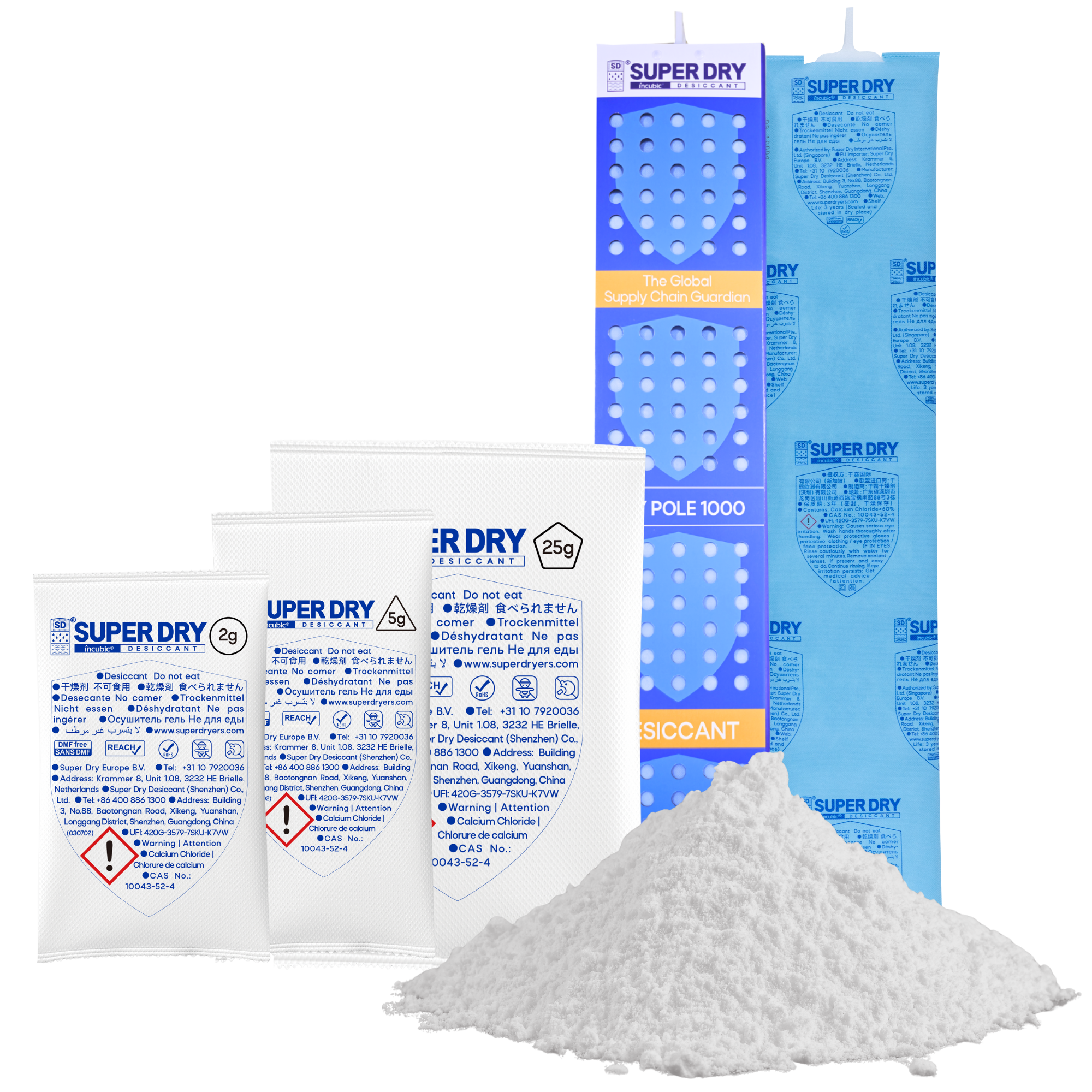
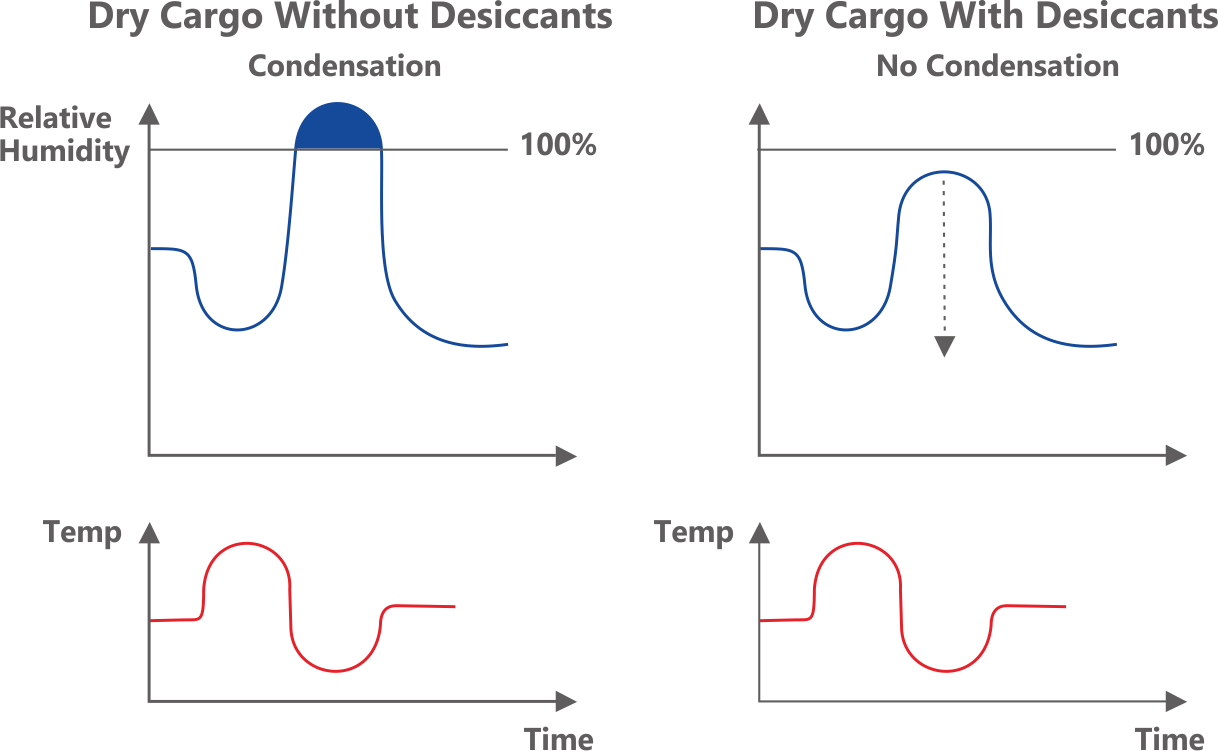
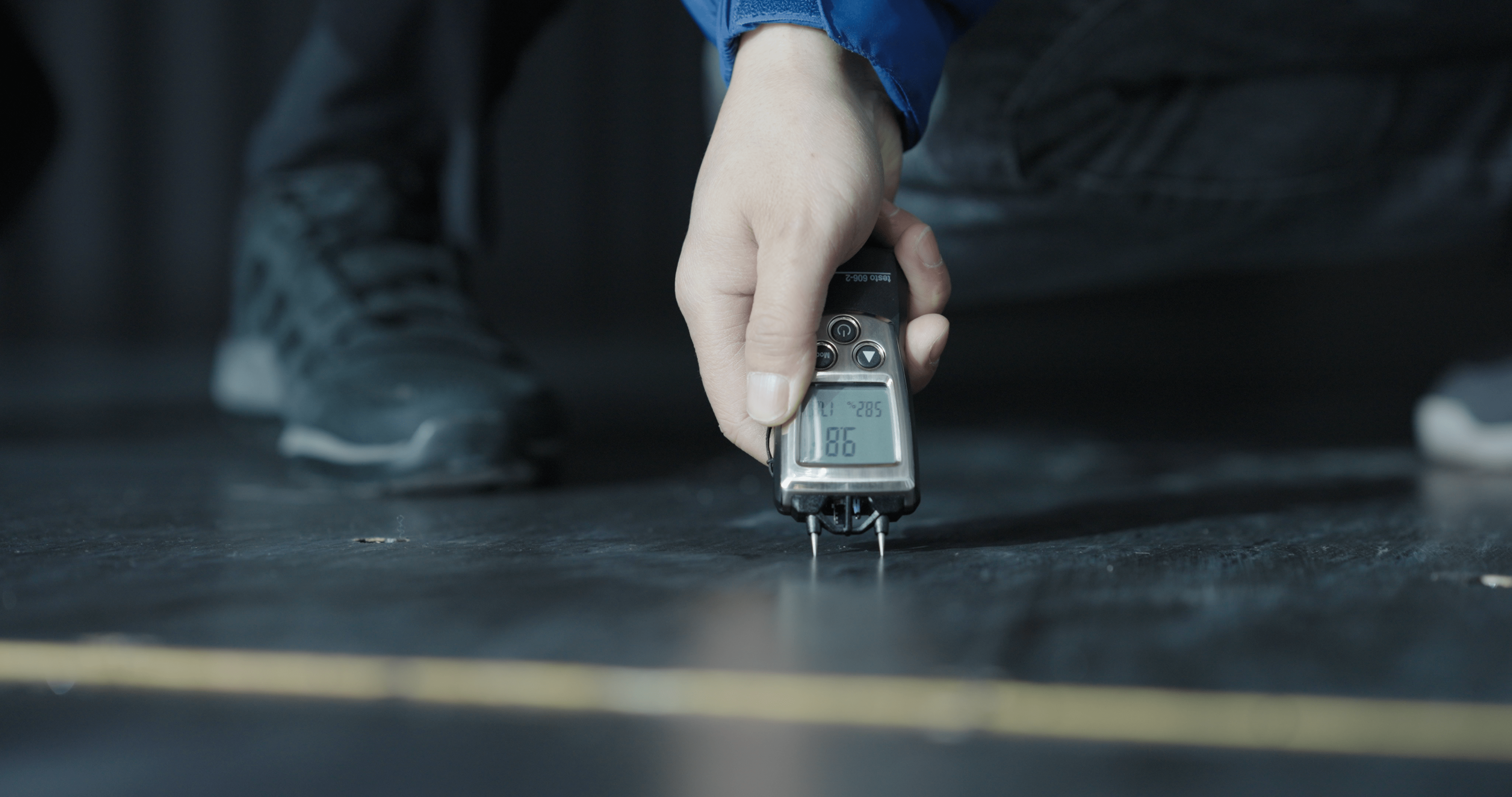
For desiccants to be effective, measures to prevent moisture damage must be integrated into the supply chain, and moisture control must be an integral part of every company’s quality management system, covering every step from material receipt to loading and shipping the products to minimize sources of moisture at all levels. Establishing processes and maintaining housekeeping rules is critical to success.
SUPER DRY pre- and post-sales services are a proven tool for raising awareness of potential moisture damage risks at all levels of your organization. We point out potential sources of risk and provide guidance on how to eliminate these risks. The SD+ service package is the perfect complement to SUPER DRY’s desiccant products.
SUPER DRY is the industry leader when it comes to solutions to prevent moisture damage. We support our customers at every step to minimize the risks of moisture damage.
How to Prevent Moisture Damage in Shipping Containers — 6 Steps
Step 1 — Assess your cargo moisture risk
Consider cargo type, voyage duration, and shipping route. High-risk cargo includes garments, electronics, food, furniture, and metal products. High-risk routes include Southeast Asia to Europe and transpacific routes during monsoon season.
Step 2 — Choose the right desiccant
For ocean shipping, always use calcium chloride container desiccants. Silica gel and clay are not effective for voyages longer than a few days as they saturate within 1–3 days and re-release moisture when temperatures change.
Step 3 — Calculate the correct quantity
– 20ft container: 4–6 SUPER DRY desiccant bags
– 40ft container: 6–12 bags
– High-risk cargo or monsoon season: use upper range
Step 4 — Install correctly
Hang desiccants on container wall lashing rings or ceiling beams. Distribute evenly — 2 bags on each side wall for a 20ft container. Do not place directly on cargo.
Step 5 — Seal the container immediately
Once desiccants are installed, seal the container doors immediately to prevent additional moisture entry before departure.
Step 6 — Inspect on arrival
Check desiccant bags on arrival. Fully saturated bags confirm the product worked correctly. Replace with fresh bags for the return voyage if needed.
Frequently Asked Questions About Moisture Damage Prevention
Q: How much does moisture damage cost?
A: Moisture damage affects an estimated 10% of all containerised cargo globally each year. A single moisture-damaged container load can cost between USD $5,000 and $500,000 depending on cargo value. SUPER DRY
desiccants, costing as little as $1–5 per unit, represent one of the highest-ROI risk mitigation investments in ocean logistics.
Q: What is the most effective way to prevent container rain?
A: The most effective prevention is installing calcium chloride container desiccants before sealing the container. SUPER DRY desiccants absorb up to 300% of their weight in moisture and remain active for up to 90 days, maintaining safe humidity levels throughout the entire voyage.
Q: How many desiccants do I need for a shipping container?
A: For a 20ft container, 4–6 SUPER DRY desiccant bags are typically required. For a 40ft container, use 6–12 bags. The exact quantity depends on cargo type, voyage duration, and the humidity of the shipping route.
Q: Can moisture damage be prevented for all cargo types?
A: Yes. SUPER DRY provides tailored desiccant solutions for all major cargo types — including garments, electronics, food, furniture, automotive parts, and agricultural products.